
Malheur Parole and Probation Compared
Probation usually comes from a court judgment and may be ordered without a state-prison term. Parole and post-prison supervision generally follow release from Oregon prison, although the judgment and sentence date control the exact label. The Oregon Board of Parole and Post-Prison Supervision sets conditions and makes decisions for the sentence types within its authority. Day-to-day Malheur County supervision is handled locally through Community Corrections.
Physical release is only one event. Someone can leave Snake River Correctional Institution yet remain supervised in Malheur County. A person on probation may never have entered Oregon DOC custody at all. The court judgment, Oregon Offender Search record, Board order, and local supervision record must therefore be read for the question each can answer.
| Supervision | How it starts | Best verification |
|---|---|---|
| Probation | A court orders community supervision | Judgment, later court entries, and Community Corrections |
| Parole | Release under Board authority for an eligible sentence | Board Action Form, OOS, and local office |
| Post-prison supervision | Supervision follows a determinate prison term | Judgment, OOS caseload, and local office |
The distinctions matter when asking if Malheur County parole or probation has ended. A prison gate-out date does not establish discharge from supervision, and a court sentence alone may not show a later transfer, inactive status, or earned discharge.
Verify Malheur Post-Release Supervision
Start with the system that matches the sentence. Oregon Offender Search, or OOS, covers people currently in Oregon DOC custody or under a local Community Corrections office. It can display Status, Location, Caseload, and SID. A Community Corrections location can indicate that prison custody ended while supervision continues. OOS is not a permanent history, and no result may reflect full discharge, a name mismatch, or a record outside its current scope.
- Gather the full name, SID if known, court case number, and the last known releasing facility.
- Search OOS by SID or name. Open the linked SID and read Status, Location, and Caseload together.
- Compare the OOS details with the criminal judgment and any probation or discharge entries in the Oregon court record.
- Contact Malheur County Community Corrections when the caseload or expected residence points to this county.
- For a Board case, request the Board Action Form or final order. A hearing notice alone does not prove its outcome.
- Record the lookup date and confirm any warrant or absconder report with current authority.
Oregon VISOR can issue custody and supervision notices, but it is not a substitute for an order. Its search is scoped to people currently in custody or under supervision, and the portal can flag offline jails. A saved alert helps establish what a participating agency reported at a given time. It does not decide whether another authority took custody or whether supervision was later discharged.
- Discharge
- The formal end of a sentence or supervision term.
- Caseload
- The office or supervision assignment shown in a corrections record.
- Absconder
- A person officially reported as having stopped complying with supervision whereabouts requirements.
- Detainer
- A request or hold from another authority that may affect release.
Note: Name-only matches are weak; use the SID, case number, status, and supervising location before drawing a conclusion.
Malheur County Supervision Office
Malheur County Community Corrections is part of the office led by Sheriff Travis Johnson. It supervises probationers and parolees who live in the county, performs presentence investigations, and prepares release plans for people returning to Malheur County or nearing prison release. The service number and records-request number serve different purposes.
Malheur County Community Corrections
1682 SW Fourth Street
Ontario, OR 97914
Service: 541-881-2400
Fax: 541-889-8311
Records contact: Lt. Jim St. Michell
541-881-2407
Jim.Stmichell@malheurco.org
Use the public service line for supervision routing. Use the county policy contact for a focused request for an existing supervision record. A request should identify the person, case or SID, date range, and sought document. Oregon Public Records Law permits exemptions and redaction, so the office may provide only segregable nonexempt portions.
The Board supervision page provides forms for discharge or inactive status, extension or reactivation, earned-discharge closure, and early medical discharge. Those forms show why a bare label such as "on parole" may not capture the current stage. The signed order or closure record is stronger evidence than an old search result.
The manifest image below comes from the official local supervision page.
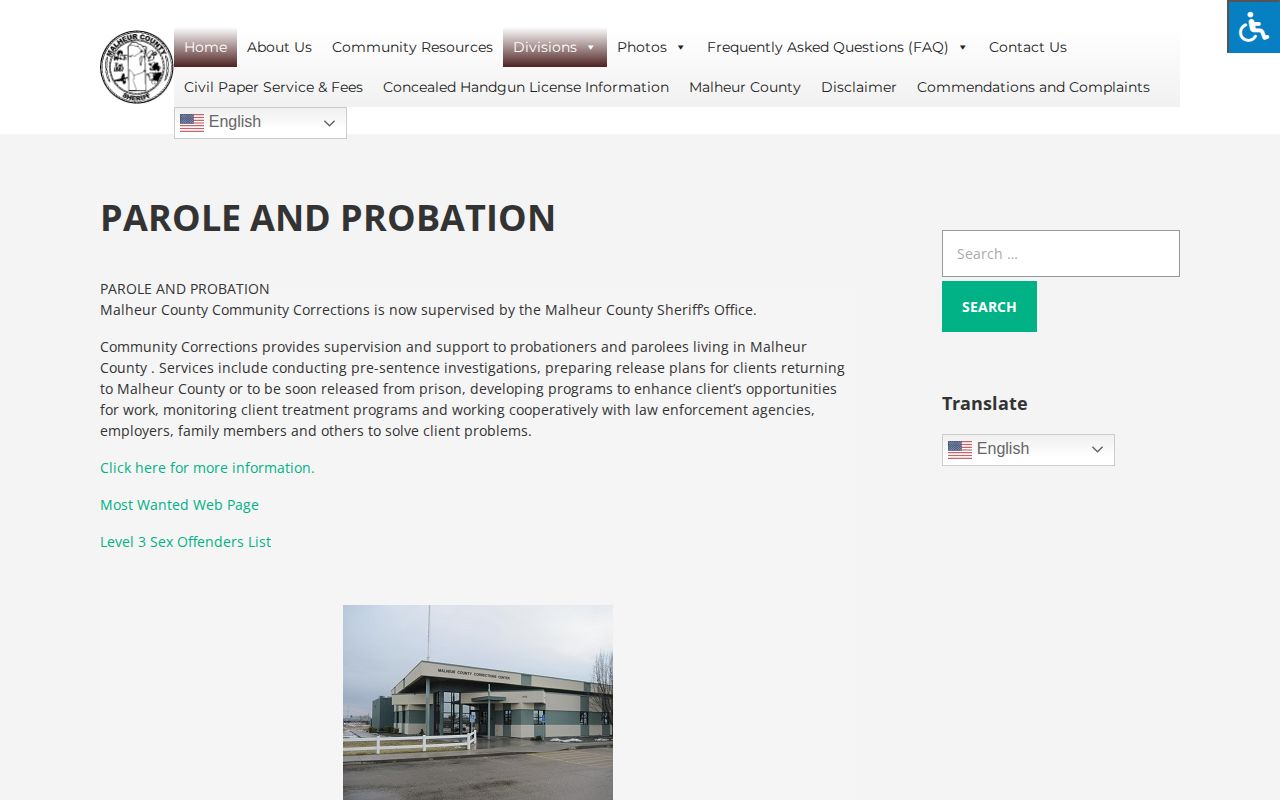
It identifies the local office and its release-planning role, which helps separate Board authority from local case management.
Malheur Release Plans and Diversion
Community Corrections expressly prepares release plans for people returning to Malheur County or soon to leave prison. A plan may connect custody, supervision conditions, residence, reporting, and services. It is part of a supervised transition, not proof that every legal obligation ended. The supervising officer and signed release documents control.
Malheur County also has a separate jail-diversion route. The documented Jail Diversion team coordinates with courts, law enforcement, Community Corrections, health systems, and other partners. An eligible jail inmate can be released to a local inpatient rehabilitation facility. That outcome should be recorded as a structured diversion or treatment placement, not an ordinary unconditional discharge.
These paths explain why location matters. Someone may no longer be inside the Malheur County Correctional Facility while still subject to court conditions, treatment placement, parole, probation, or post-prison supervision. The broader Malheur County released-inmate search and release-record route appears on the home page.
Confirm Malheur Supervision Warrants
A supervision violation may lead to local sanctions, changed conditions, a Morrissey hearing, or return to custody. A Morrissey hearing is a due-process hearing on an alleged parole violation. None of those outcomes should be inferred from a missed appointment, a blank portal, or an old page.
The MCSO Most Wanted page is a narrow lead. When inspected, it displayed no images and warned that the page does not verify a valid warrant. There was also no official statewide public absconder list in the research sweep. A blank list does not mean there are no active warrants, while a name or old image would not by itself prove one remains valid.
The official MCSO source shows the page and its critical warrant caveat.
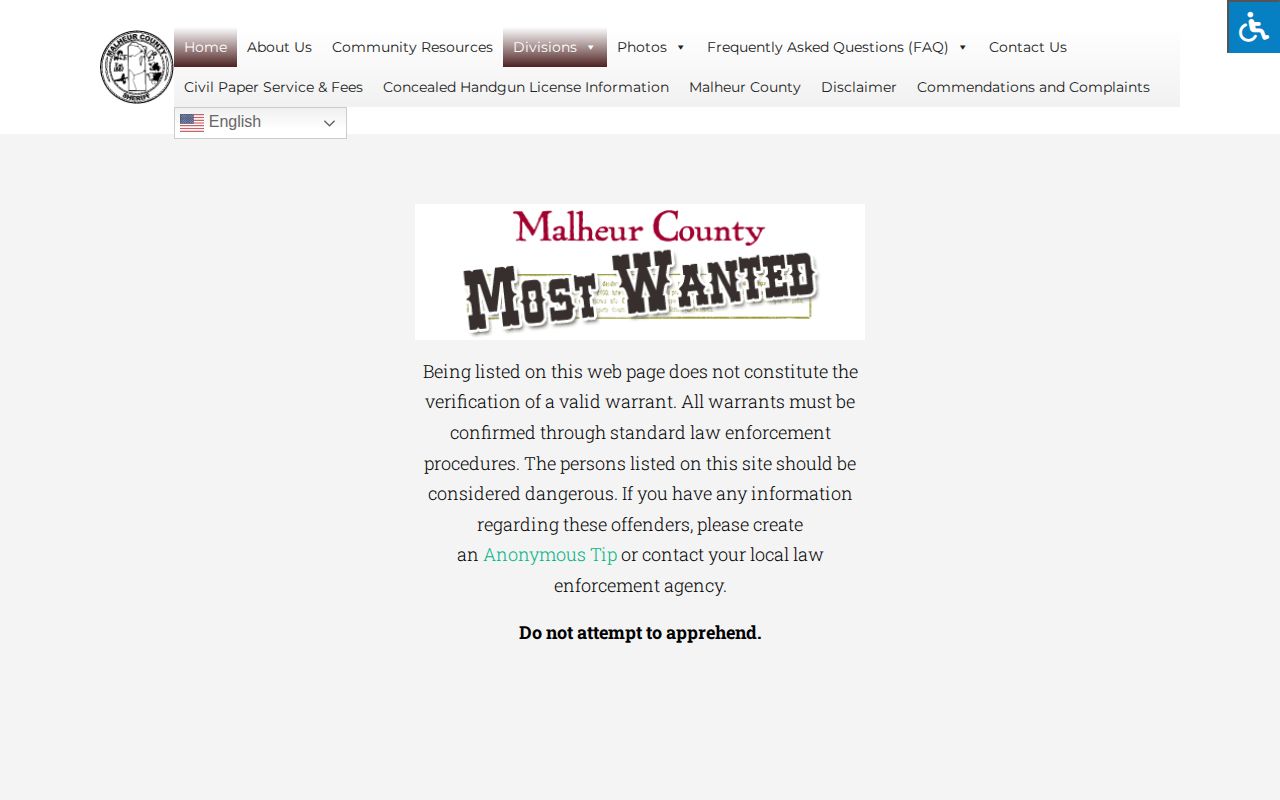
Confirm a warrant through Community Corrections or law enforcement before treating the lead as current. Do not attempt to act on a web listing.
Note: Registry pages cover only defined statutory groups and cannot establish a general Malheur County supervision or release status.
Documents After Malheur Prison Release
Oregon law adds a practical document layer to state-prison release. ORS 421.125 directs DOC at discharge or parole to ensure proper clothing and provide available identity-related documents. Those may include a birth certificate, Social Security card, and state identification card or driver license, along with verification of work history while confined.
This rule applies to DOC discharge or parole logistics. It is distinct from the Malheur County jail property rule, which says a released person must take all personal property. Someone transported to another agency may take only legal mail and must arrange a property release beforehand. That contrast can help distinguish a community release from a transfer, but neither rule alone proves current supervision.
Malheur Parole Hearings and Discharge
The Oregon Board hearing hub has a live, rolling calendar. Hearing types can set, affirm, defer, reduce, or postpone a projected parole date depending on the sentence. Yet a scheduled hearing reveals no result. Most modern determinate sentences do not receive a Board release hearing, although the Board may set supervision conditions.
Board labels carry specific meanings. A Prison Term hearing can set a projected parole release date or decline to set one. A Personal Review can reduce a term for outstanding reformation. An Exit Interview can affirm or defer a projected date, while a Parole Postponement can move it after serious institutional misconduct. A Future Disposition hearing after revocation decides whether the person is re-released or serves more time. These outcomes concern limited Board-jurisdiction cases and should not be applied to every person released from an Oregon prison.
For a Board-jurisdiction case, obtain the judgment, offense date, sentence statute, amended orders, and Board order. Do not calculate eligibility from the offense name alone. The Board has no public searchable decisions database, so request the Board Action Form or final order through its records-request channel. Most adult-in-custody records are retained for 25 years and most Board records for 10 years, subject to fees and exemptions.
The official hearing image comes from the Board hearing source.
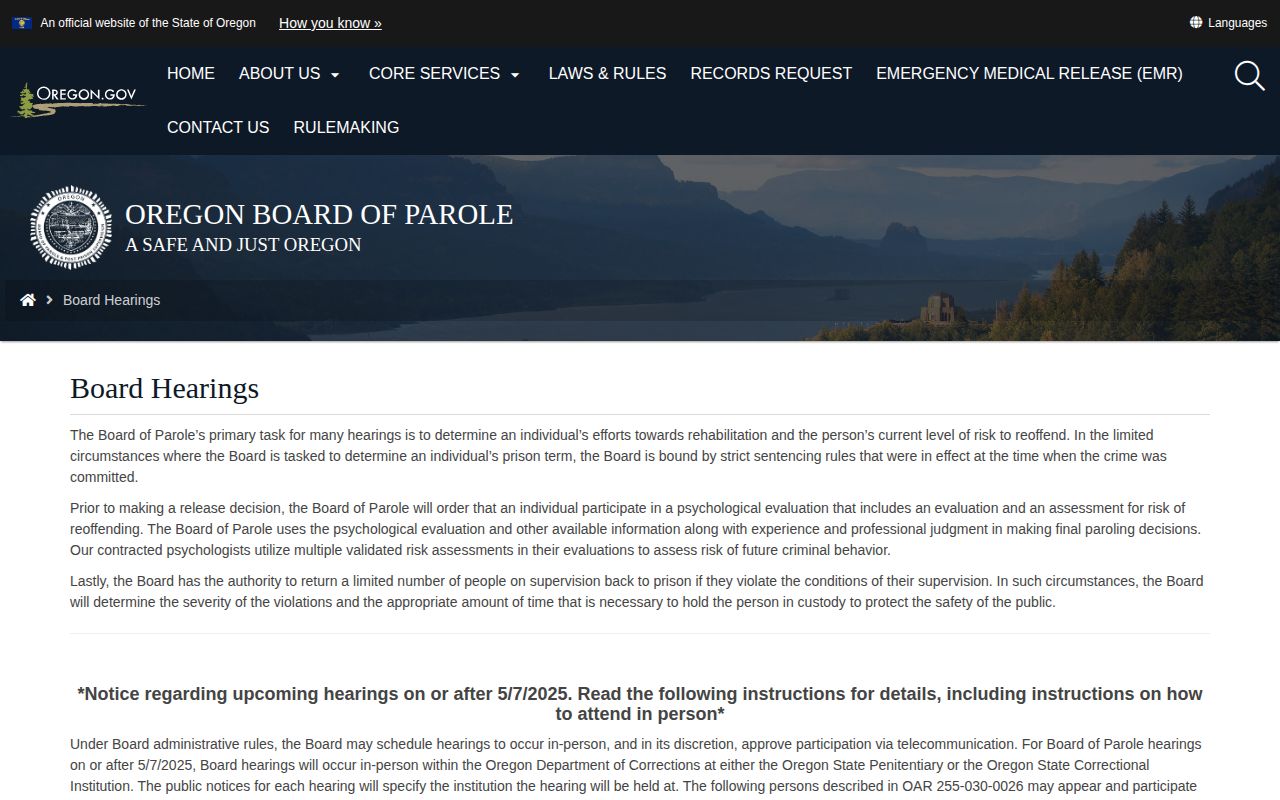
Its schedule is a starting point; the final order is the record that shows the result and any effect on release or supervision.
Supervision ends through a formal discharge or closure, not merely because the person no longer appears in OOS. A court probation-discharge entry, local closure record, Board Action Form, or DOC record may supply the needed proof. Match the authority to the supervision type and ask for the existing document.
A Board record request should name the person, SID, hearing date, hearing type, and requested document. Records may be sent through the Board’s published request route, and fees or exemptions may apply. For a local probation record, use the separate Malheur Community Corrections contact. Keeping those requests distinct avoids asking the Board for a county probation record it does not hold.